The Wig Detective: Five Red Flags That Your 2026 ‘True Story’ Drama Has Gone Rogue
There is nothing Britain loves more than settling down with a cup of tea, a serious drama and the smug certainty that we are Watching Something Important. In 2026, telly bosses have clearly clocked this. Barely a week goes by without a new UK drama promising that it is “based on a true story”, “inspired by real events” or — my personal favourite — “emotionally true”. Translation: somebody has read a Wikipedia page, bought a wig and decided to have a go.
Now, before the telly police arrive, let me be clear: dramatising real life is not a crime. Mr Bates vs The Post Office proved that a well-made true-story drama can shift public opinion, start conversations and make grown adults shout at their tellies in righteous fury. But somewhere between the research and the costume department, a few 2026 offerings have wandered into the land of pure fabulation. And honestly? I am both furious and deeply entertained.
The group chat has become the nation’s fact-checking desk
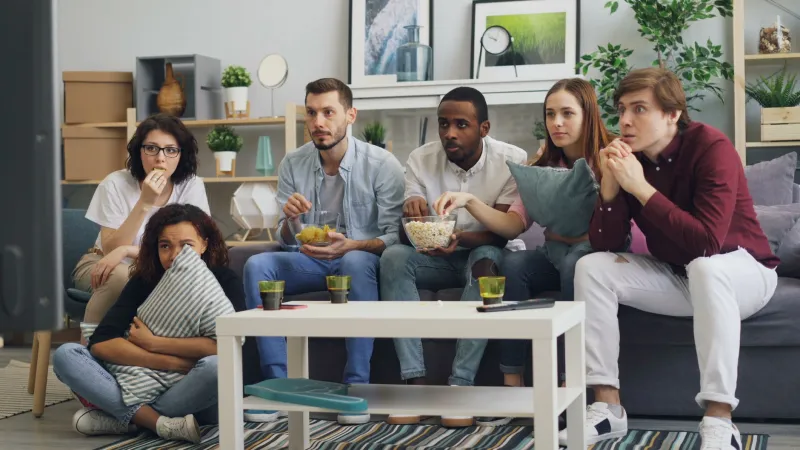
It used to be that a post-drama chat meant arguing about who was the most annoying character or whether the ending made sense. Now it is a full forensic operation. Within four minutes of the credits rolling, someone has opened Wikipedia, someone else has found a 2019 local news article, and a third person has posted a screenshot captioned: “Right, but this NEVER HAPPENED.”
This is the new watercooler. We are no longer simply watching telly; we are cross-examining it. And while I love the collective detective energy, I do wonder whether the industry owes us slightly clearer labels before we all tumble down a rabbit hole at 10pm and emerge at midnight knowing more about a forgotten council scandal than our own energy bills.
Red flag one: the wig is acting harder than the lead
You know the one. A celebrated actor has been cast as a real-life figure, and instead of resembling them, they have been fitted with a suspicious syrup that appears to have its own agent. The wig does not sit; it performs. It has more emotional range than the script.
When a production spends more time on a hairpiece than on the timeline, you are allowed to raise an eyebrow. I am not demanding a documentary-level likeness — actors act, that is the job — but if the central transformation is “they have been given a fringe and a pair of glasses”, the truth may be taking a back seat to the vibes.
Red flag two: every historical event happens within walking distance of a pub
True-story telly loves a convenient pub scene. Suddenly, two people who lived forty miles apart and met twice in real life are having a life-changing row in a cosy boozer with a roaring fire and a landlord who says, “I’ll leave you two to it.”
It is efficient storytelling, sure. It is also the telly equivalent of putting a bow on a spreadsheet. If every major historical beat is being tidied into a neat little scene in the same three locations, chances are the drama has done a spot of emotional DIY. Lovely for pacing. Slightly dubious for accuracy.
Red flag three: the villain gets a monologue nobody could possibly have heard
We all love a baddie explaining their motives in a dimly lit office while a single desk lamp does all the heavy lifting. But when a drama based on real events features a full villain monologue — complete with a chilling final line — and there were no witnesses, no transcript and no surviving account, you are no longer watching history. You are watching a writer have a lovely time.
I am not saying every line needs a footnote. But there is a difference between dramatising a gap and filling it with pure panto. If the real-life figure was described in court as “somewhat evasive”, please do not give them a speech about being the architect of their own downfall while stirring a whisky.
Red flag four: the timeline has been medically flattened
Real life is messy. It has boring months, false starts and admin. Telly does not like admin. So stories get squashed: a five-year campaign becomes six weeks; two unrelated scandals become one mega-scandal; a person who was merely present is promoted to chief witness because it makes for better telly.
This is where the “true story” label starts to strain. If the central timeline has been put through a pasta machine, fine — but say so. A little on-screen note saying “some events have been condensed” would save us all a lot of shouting at the telly. We are not asking for a lecture. Just a breadcrumb.
Red flag five: the final act is a speech about Being Heard
Look, I am as partial to a rousing courtroom speech as the next person. But 2026’s true-story dramas have become addicted to the third-act moment where a character stands up and delivers a soaring monologue about truth, justice and the British way. It is catnip for awards clips. It is also increasingly fictional.
If the real case ended with a settlement, a procedural ruling and a paragraph in the local paper, please do not give us a standing ovation in a cathedral. We can handle nuance. We can even handle a slightly unsatisfying ending. What we cannot handle is being told it is all true while a character delivers a speech that no human has ever made outside of a trailer.
So what do we actually want?
Not a po-faced disclaimer before every drama. Not a bibliography scrolling after the credits. Just a bit of honesty about the bargain. “Inspired by real events” can cover everything from meticulous research to a wildly confident wig, and that range is doing a lot of heavy lifting.
Maybe the answer is a simple telly traffic-light system: green for “closely researched”, amber for “dramatised”, red for “we have invented a pub, a villain and a dog”. Until then, the group chat will keep fact-checking, the Wikipedia tabs will keep multiplying, and GloryTV will keep watching — one eyebrow raised, one finger hovering over pause, and one very strong opinion about that wig.
Because we love a true story. We just prefer ours with the truth left in.